Choosing Lighting Together When Your Styles Differ
Agree on the job and placement first, then compare the shapes and visual details each person can enjoy living with.
By Lumière Light Studio Editorial
One person wants a lamp that stands out; the other wants it to blend into the room. Looking through more options may only repeat the disagreement. Before choosing a shape or finish, separate what the lamp must do from what each person would like to see.
A shared choice does not have to be the most neutral object available. It needs a clear role, a workable location, and a visual reason that both people can explain. That gives the discussion something more useful than competing style labels.
Agree on the job before debating the look
Choose the location together. Stand beside the surface, then sit in the places from which each person will see the lamp. A form that looks discreet from one chair may dominate the view from another. Record those differences before deciding that either preference is unreasonable.
Agree on what the lamp contributes. Is it a decorative background source, a focal object, or intended for another specified purpose? If one person expects reading light and the other expects a quiet accent, the disagreement is partly functional rather than aesthetic.
Keep essential activity lighting separate from unverified decorative performance. Then establish fit limits: available surface, room for ordinary belongings, access to controls, and a suitable cable route. Both people should use the same constraints when suggesting options.
Translate style labels into visible qualities
Words such as traditional, modern, or minimal can conceal several preferences. Ask what each means in this room. One person may value a curved shade while the other dislikes a busy base. Those preferences may be compatible even if the labels appear opposed.
Each person can name a quality they particularly want and one they would rather avoid. Describe the object, not the other person's taste. A preference for a quiet outline is easier to work with than a judgement that the other choice is too much.
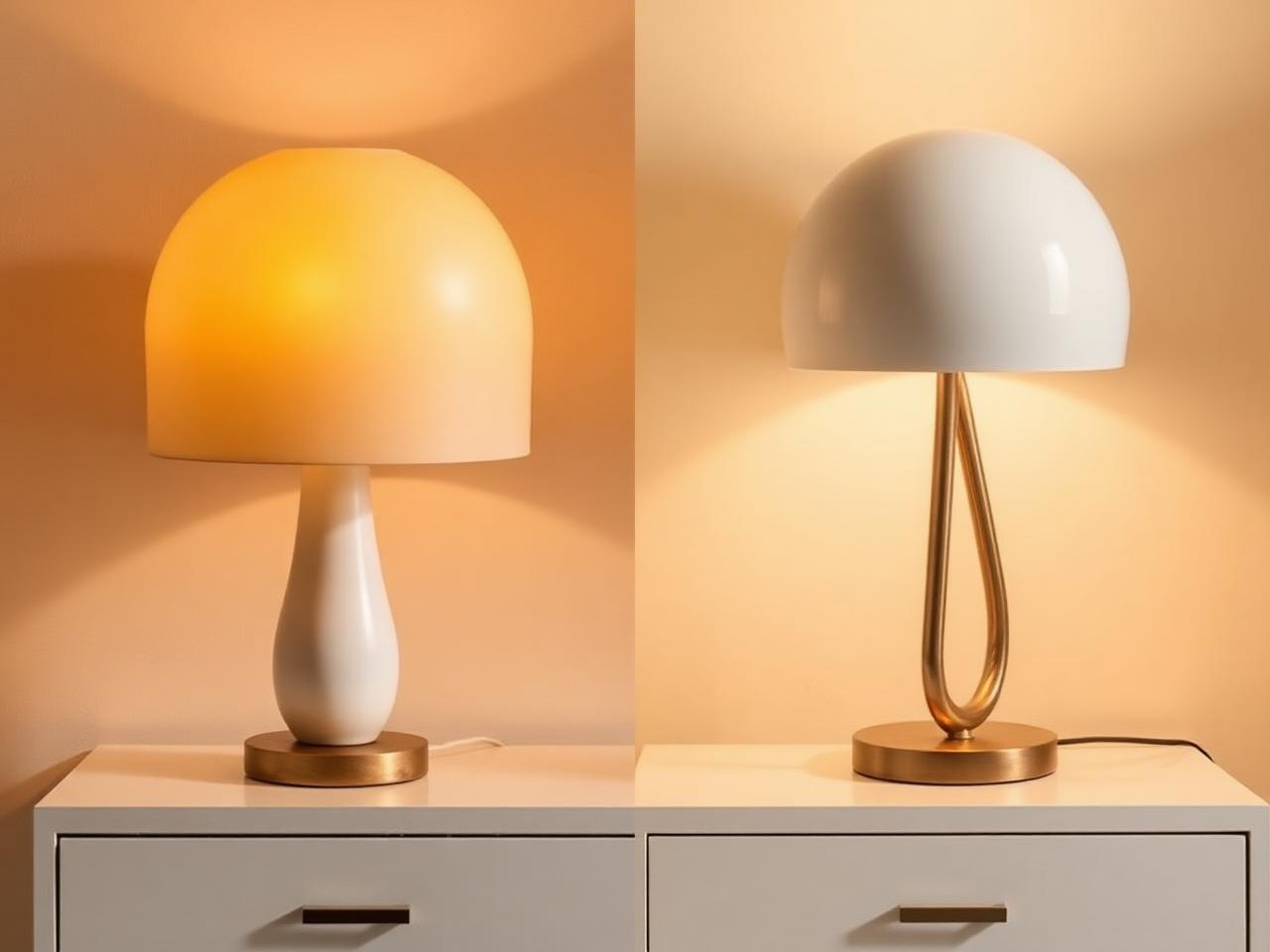
Look for a point of connection already present in the room. A lamp might repeat a curve in one person's favourite chair and a colour in the other person's picture. It need not imitate either object or settle every stylistic difference in the home.
Compare one candidate against the shared brief
Use the same evidence for each option. Look at the whole form, its current dimensions and specifications, and its relationship to the intended surface. Do not compare one polished room photograph with another lamp's plain product image as though the presentation were the product.
Ask each person to explain what works, what remains uncertain, and what would make the option unsuitable. This distinguishes a preference that can flex from a practical limit that cannot. Missing information should stay an open question rather than becoming a reason to assume the best or worst.
If a disagreement persists, identify its scale. A small colour accent may answer the wish for expression without changing the whole outline. Alternatively, another suitable location might allow a more visible form without dominating a regular seat. Neither solution requires more than one new lamp.
Leave the decision open when no option fits
A shortlist does not create an obligation to choose. If every candidate fails a shared requirement, revisit the brief or keep the existing arrangement. Forcing a compromise can leave both people with something that does not work.
Before browsing again, write a shared sentence describing the job, place, and two visual qualities you both accept. Use it to assess the next candidate together, and resolve missing specifications before making the choice.
The Editor's Notes
Get the Lumière styling notes
One quiet essay a month on layering light and shaping the atmosphere of a room. No noise. Unsubscribe anytime.
The Editor's Notes
One essay. One piece. Once a month.
Quiet dispatches from the studio. Unsubscribe anytime.
For the hour after
For the hour after the overhead light goes off
Shop lamps built for the quiet part of the evening.
Share this guide